Honeypod Shelter
A folding hexagonal emergency shelter — inspired by the honeycomb, engineered for the unexpected.
HoneyPod

Howie-Bee
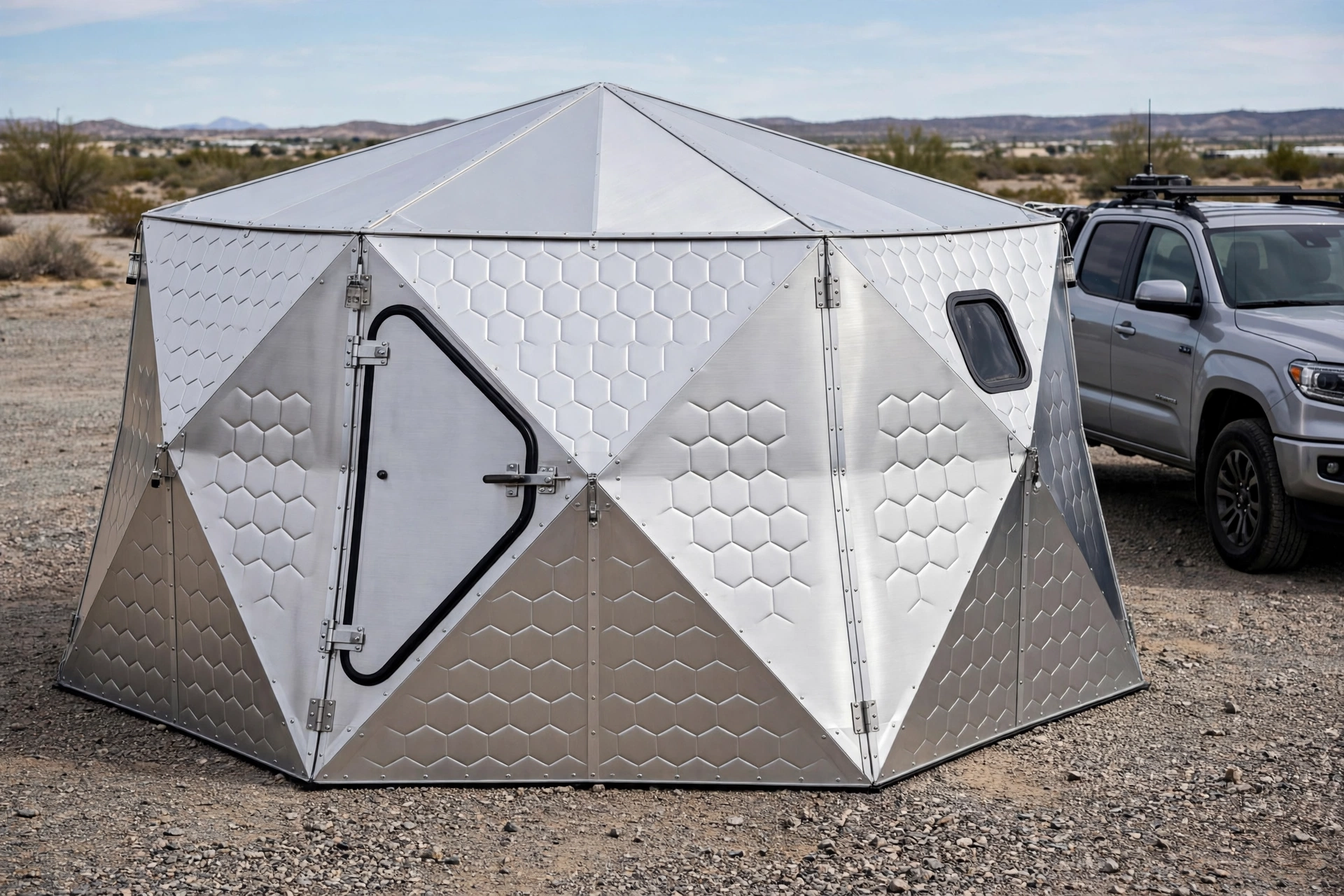
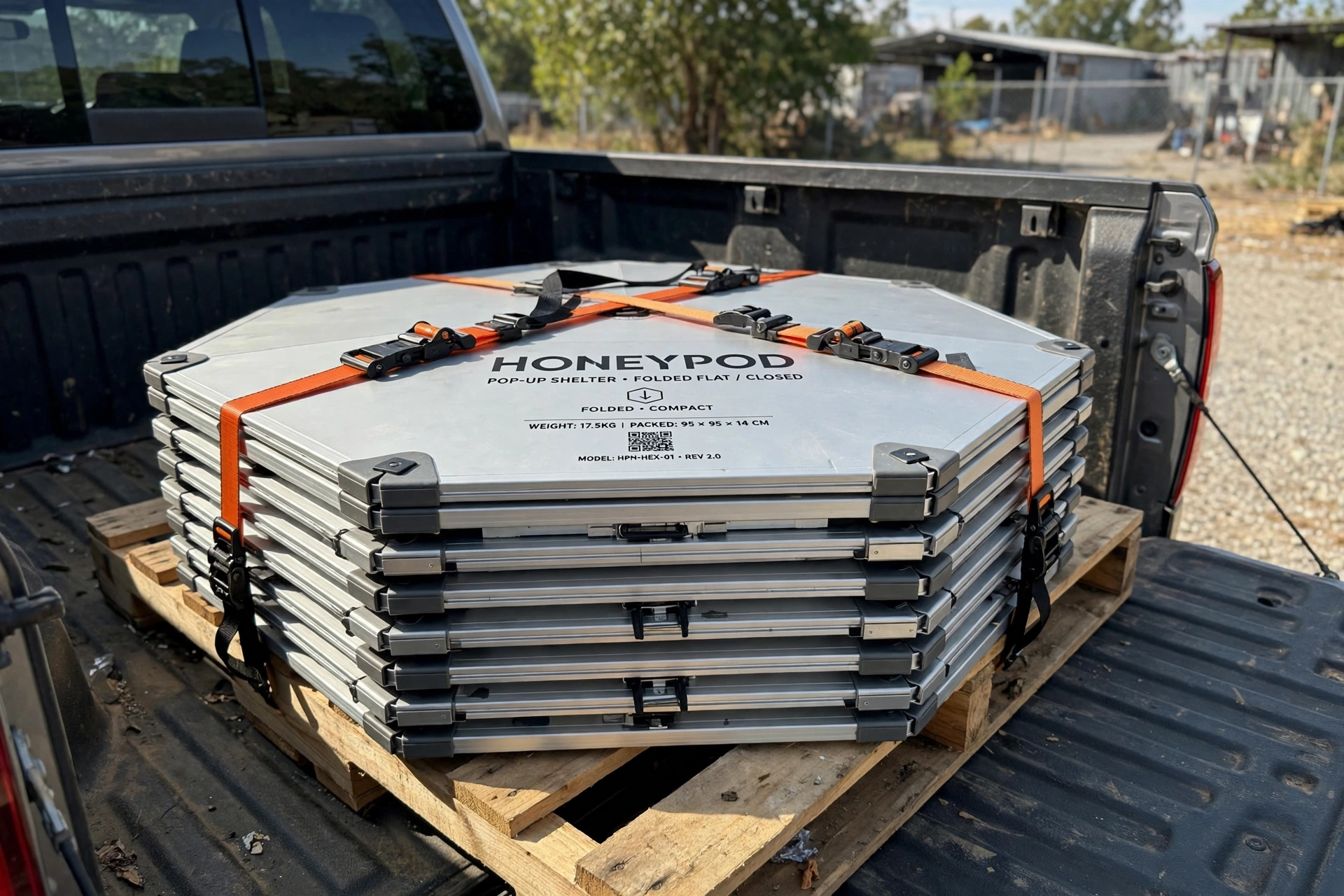
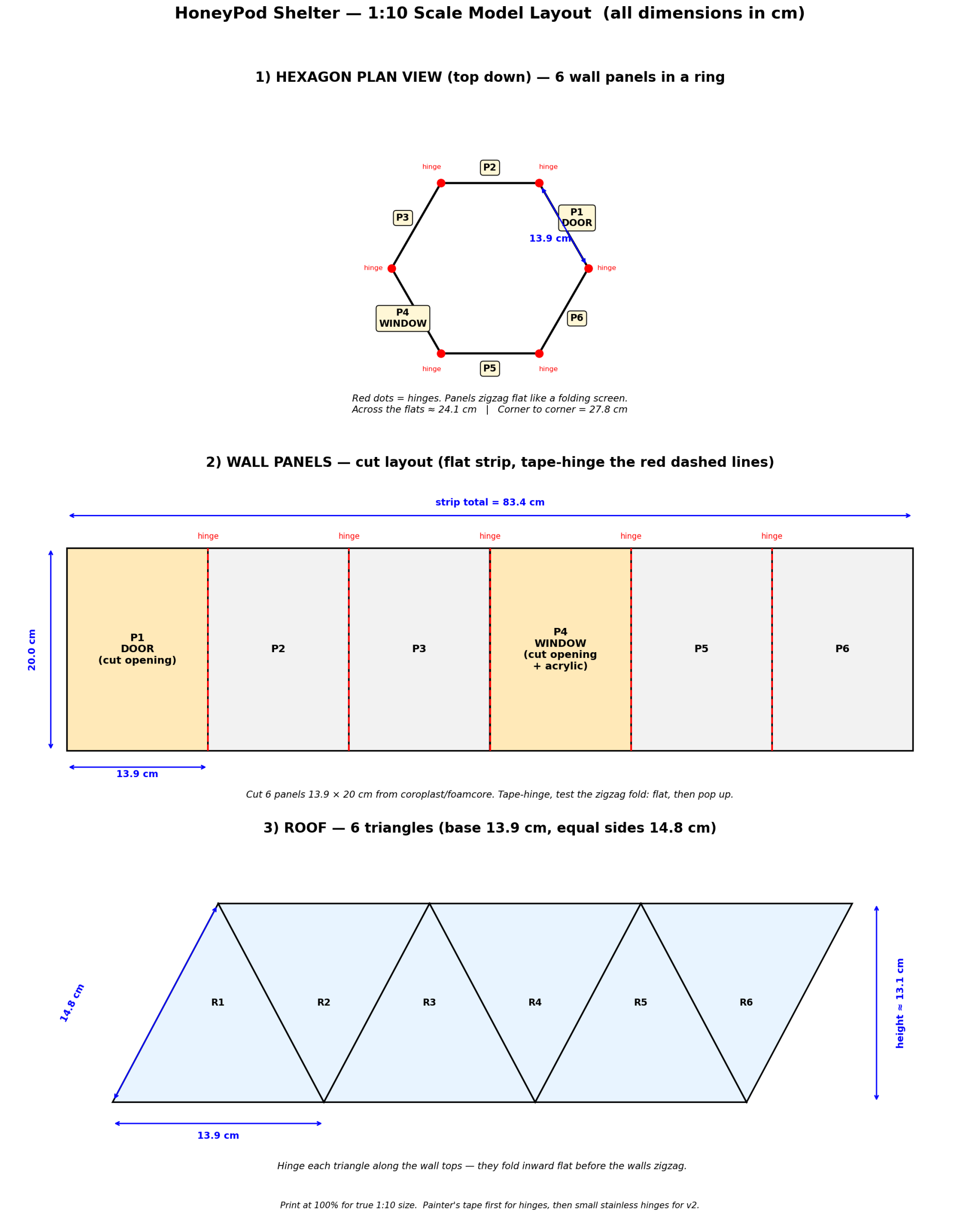
- Folding hexagonal popup shelter — reads as honeycomb when erected
- Aluminum construction (BC Fire Code friendly)
- 2.4 m across, 2.0 m walls, hexagonal pyramid roof
- Folds flat, truck-loadable — setup by 1–2 people, no crane
- Estimated ~180 kg total, heaviest panel ~15 kg
- Ballistic-resistant window (modest size)
$7,770.00
Estimated price only — final pricing varies by configuration, site requirements, and certification. Contact Honeypod for a custom evaluation.
In ProgressLuxury Pod
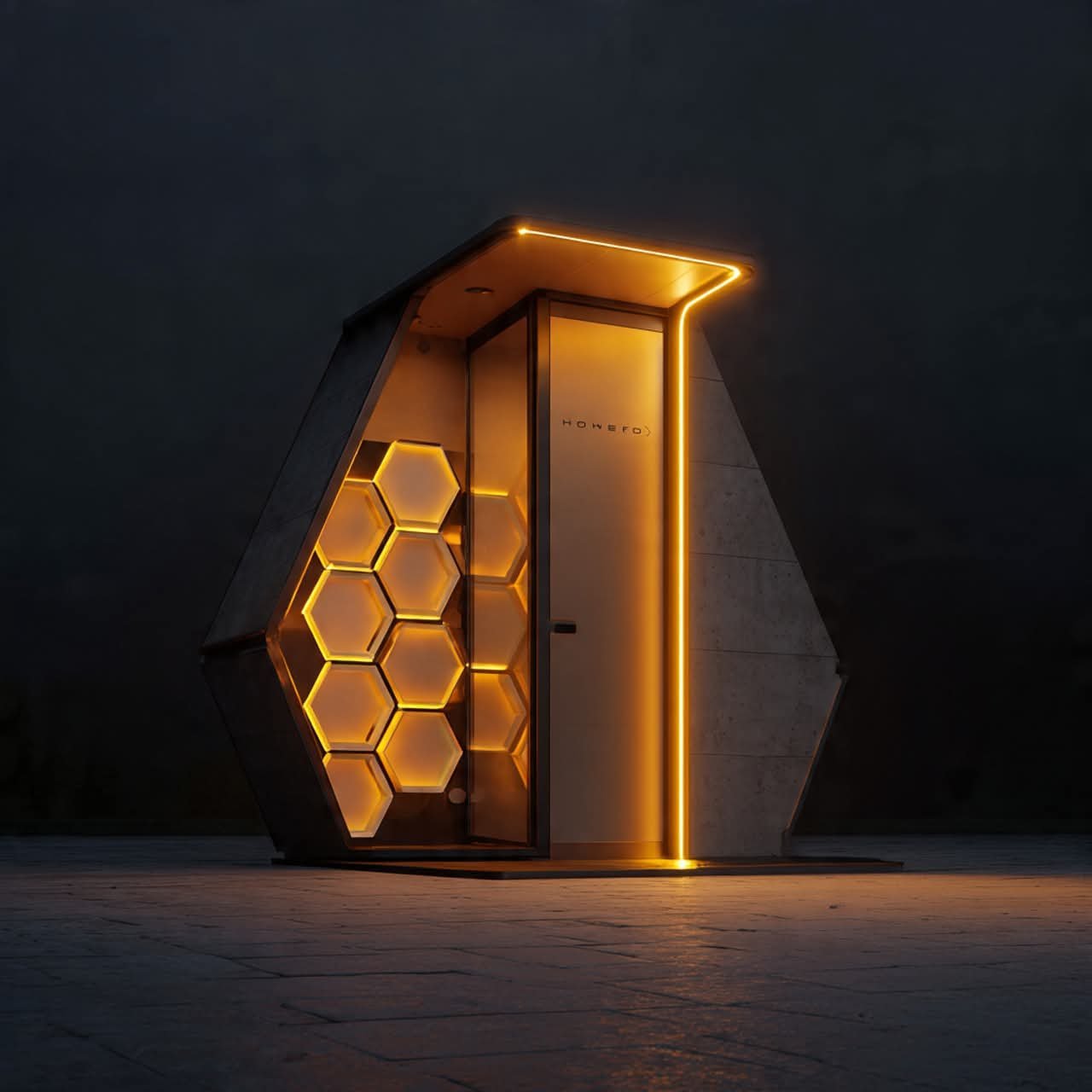
A complex shelter built from recycled plastics.
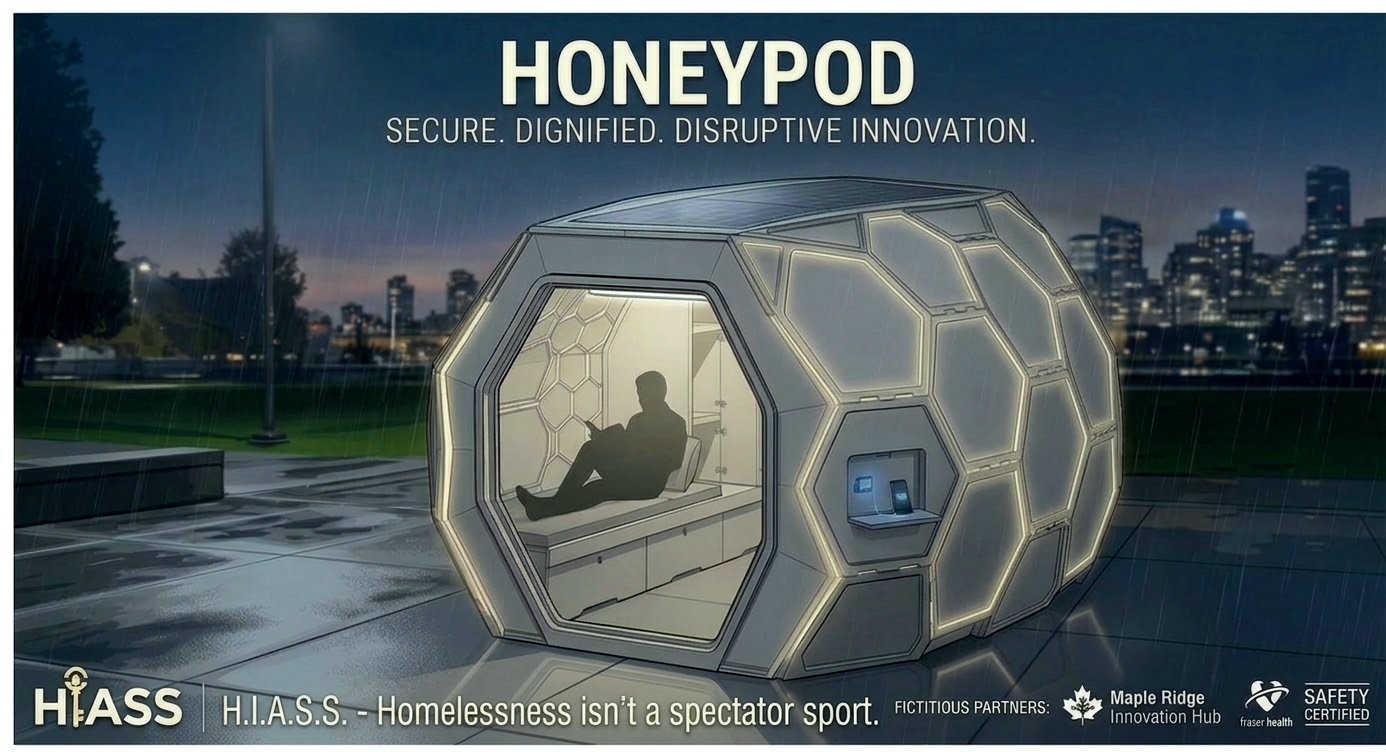
Concept render — secure, dignified shelter. H.I.A.S.S.: Homelessness isn’t a spectator sport.
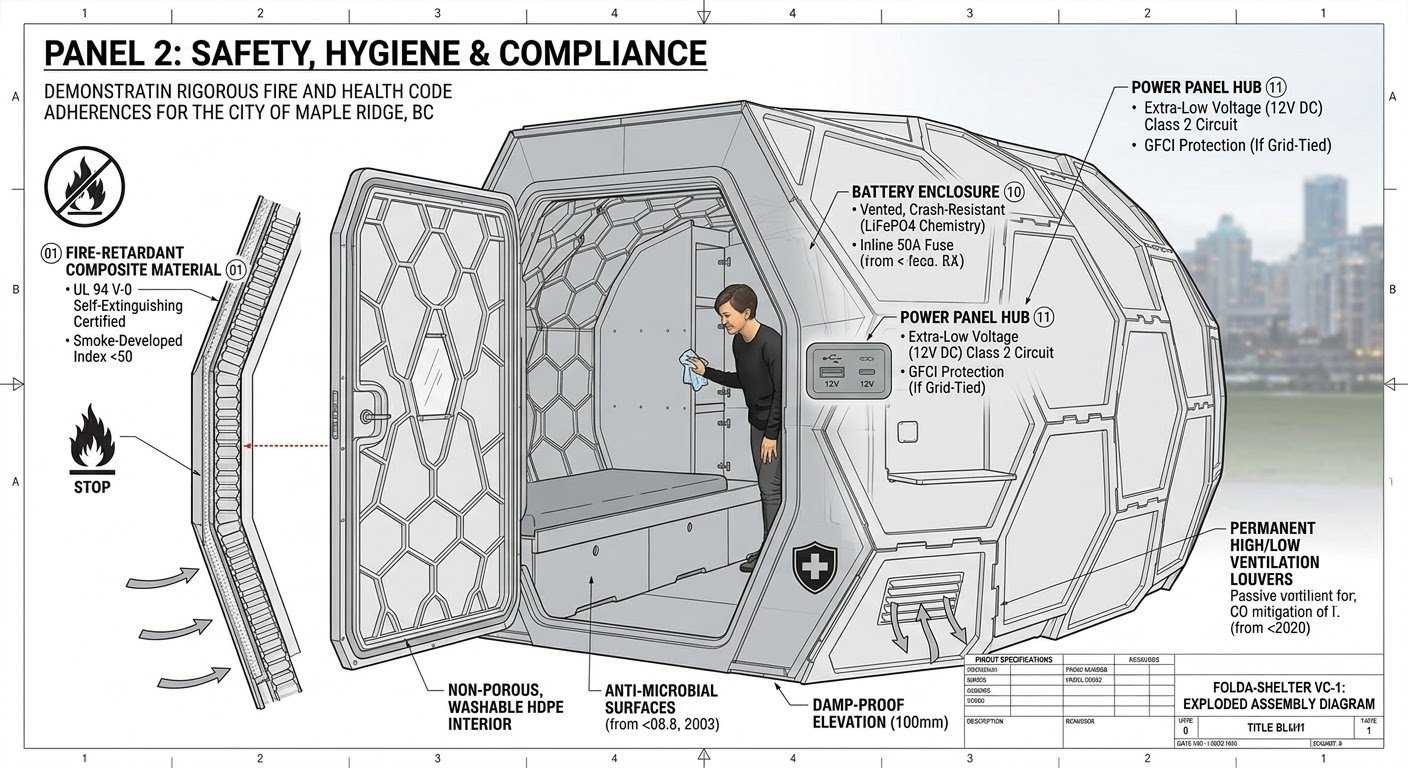
Safety, hygiene & compliance — fire-retardant composite shell, vented LiFePO4 battery enclosure, 12V power hub, ventilation louvers.
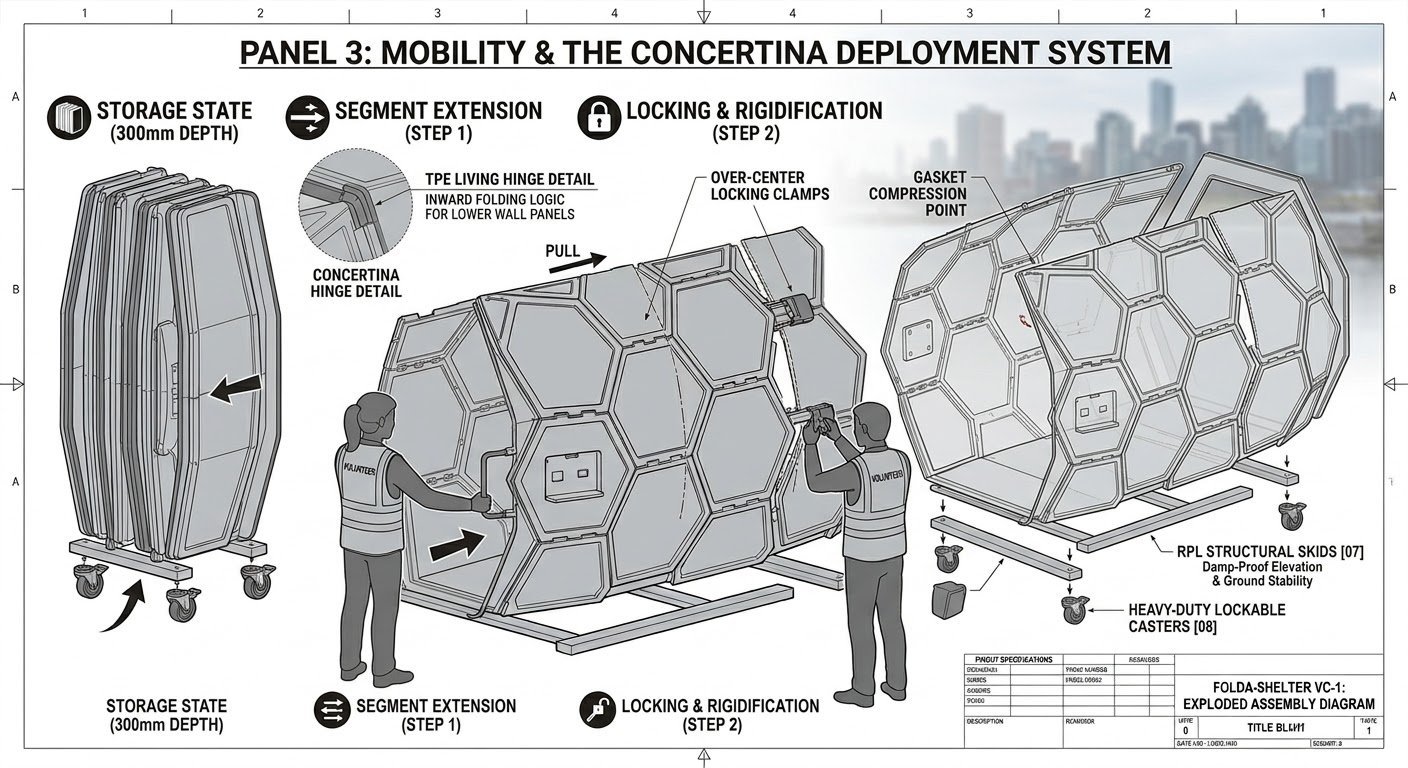
Mobility & concertina deployment — folds flat to 300mm, pulls open in two steps, locking clamps make it rigid.

Off-grid utility — roof-integrated solar, rainwater diversion, battery management system, USB/LED lighting and shore-power circuits.
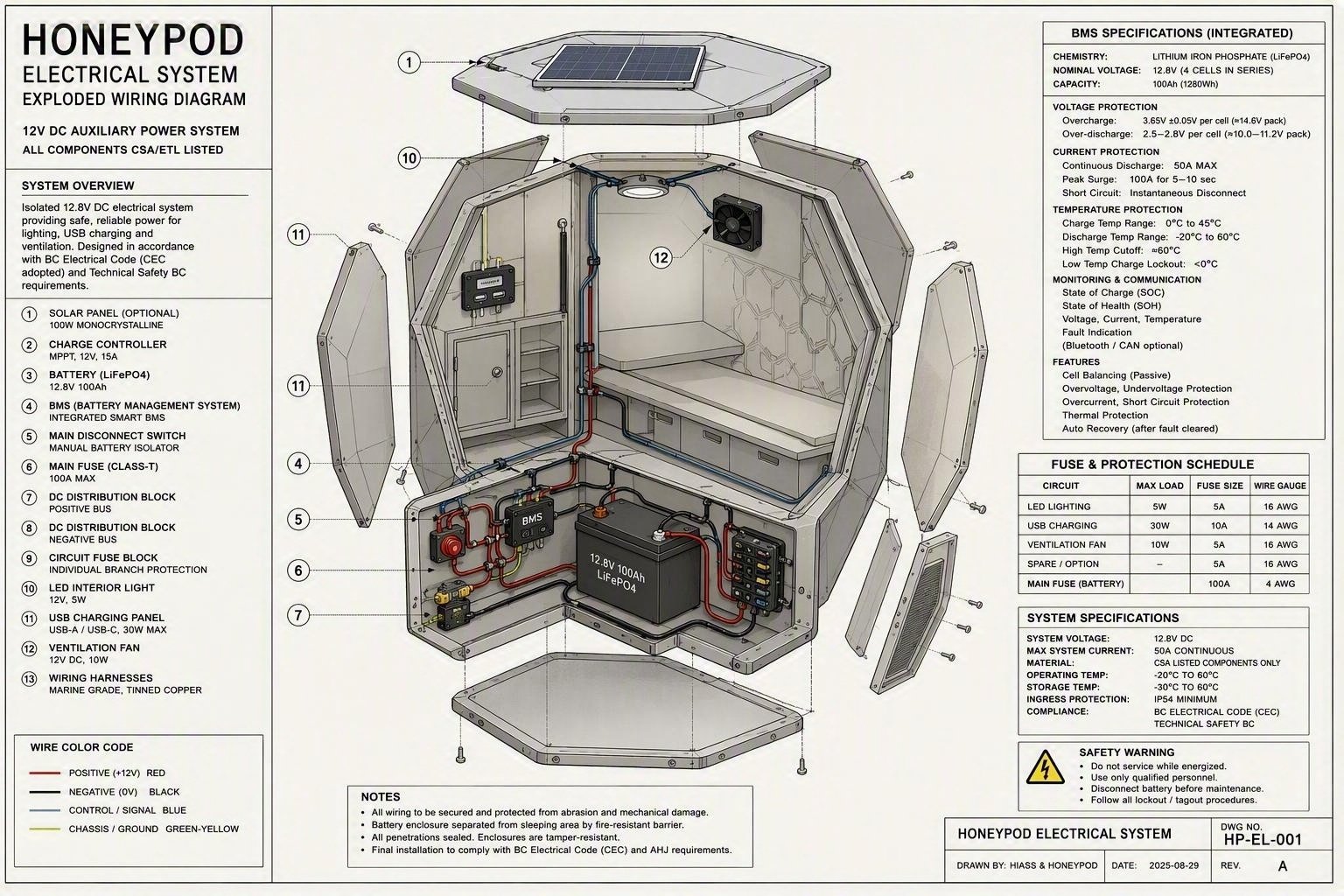
Electrical system — exploded wiring diagram of the 12V DC auxiliary power system: solar panel, charge controller, 100Ah LiFePO4 battery, smart BMS, fused distribution, marine-grade wiring.
STATUS: ON HOLD — funding needed
Approximately $150,000 in R&D is needed to take it through testing and certification. Guidance on the certification path and recycled-material supply chain has been received (September 2026).
R&D facts — shelter pod development pathway
(from economic development office correspondence, Sept 2026)
- Certification is the long road. — Building any product for human habitation means certifications that are beyond a municipality’s authority. Testing and certification must come before any local government would consider approving a structure using novel technology.
- Get specialists early. — You’ll need a mix of specialists across development, engineering, testing, and certification of components. Product-development consultants can confirm the exact steps.
- Recycled plastic supply chain exists in BC. — Plastic packaging waste falls under BC’s provincial Extended Producer Responsibility (EPR) program — there’s already an integrated local supply chain. Merlin Plastics (BC-based) processes collected household plastic waste into recycled flakes and pellets sold to commercial/industrial buyers as an alternative to virgin resin. Rigid non-packaging plastics are now being collected in BC communities too.
- Startup resources: — Small Business Advisory Service (BC) and the Canada Business Benefits Finder (matches ~1,600 programs).
Pod Hive

Details coming soon.